


Product inspection
Random samples drawn from finished cartons of your lot. We deglaze, weigh, count and grade them against your spec and send you the results before you release payment.
During or right after productionWe inspect your shrimp at the packing plant, during production and container loading, and send you a report with photos, count, net weight after glaze, defects and temperature. We are paid by the buyer, so we report for the buyer.
Shrimp & Sea is an independent shrimp inspection company in Ecuador. Since 2019 we have inspected Ecuadorian vannamei shrimp for importers in the United States, Europe and Asia. We check that what the plant packs matches your purchase order and specification, and we tell you before shipment, when a problem can still be fixed at the plant and not in a claim months later.
Random samples drawn from finished cartons of your lot. We deglaze, weigh, count and grade them against your spec and send you the results before you release payment.
During or right after productionOn-site at the container: core temperature, container set point and pre-cooling, carton count, labels, stowage and seal numbers, all photographed.
Loading dayIf a lot fails, the plant reworks or replaces it and we inspect again, so only approved product goes into your container.
After a failed resultBefore production, we go through the proforma and label with the plant: size, glaze, packing, brand, sulfite limits and destination requirements.
Before production startsA second check of invoice, packing list, B/L draft and certificates against the order, to avoid errors that hold a container at the port.
After departureBuying from Ecuador for the first time? We also connect you with approved plants and follow your order from confirmation to arrival.
Before you buyEvery inspection report covers the same parameters, measured on samples from the lot and compared with your purchase order.
| Parameter | How we measure it | What it protects |
|---|---|---|
| Count per lb / kg | Pieces counted per pound (or kilo) after deglazing, plus uniformity between the largest and smallest shrimp. | That a 26/30 is really 26/30, and your cost per piece. |
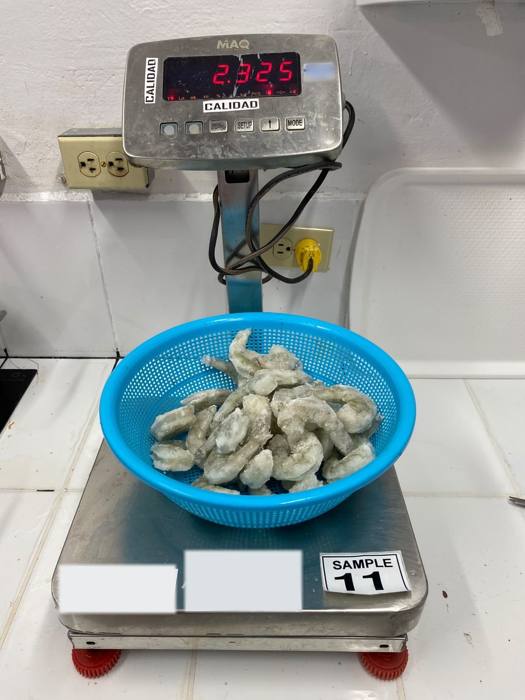
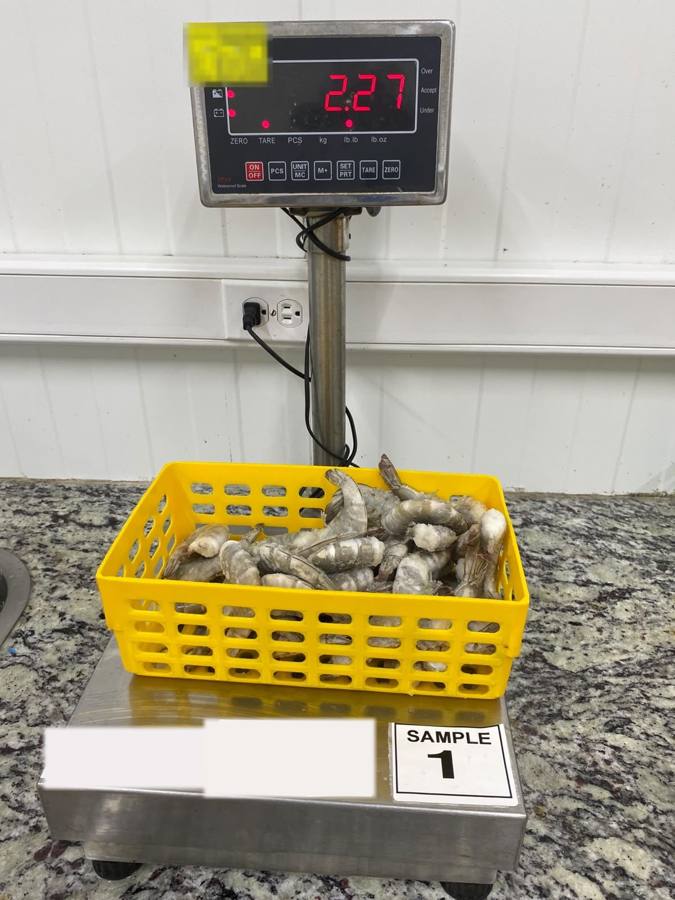
| Net weight after glaze | Glaze removed with water, product drained and weighed; compared with the declared net weight per box. | Paying for shrimp, not ice. Short weight is one of the most common claims in frozen seafood. |
| Glaze percentage | Frozen weight vs. net weight on the same sample. | That the glaze matches the contract. |
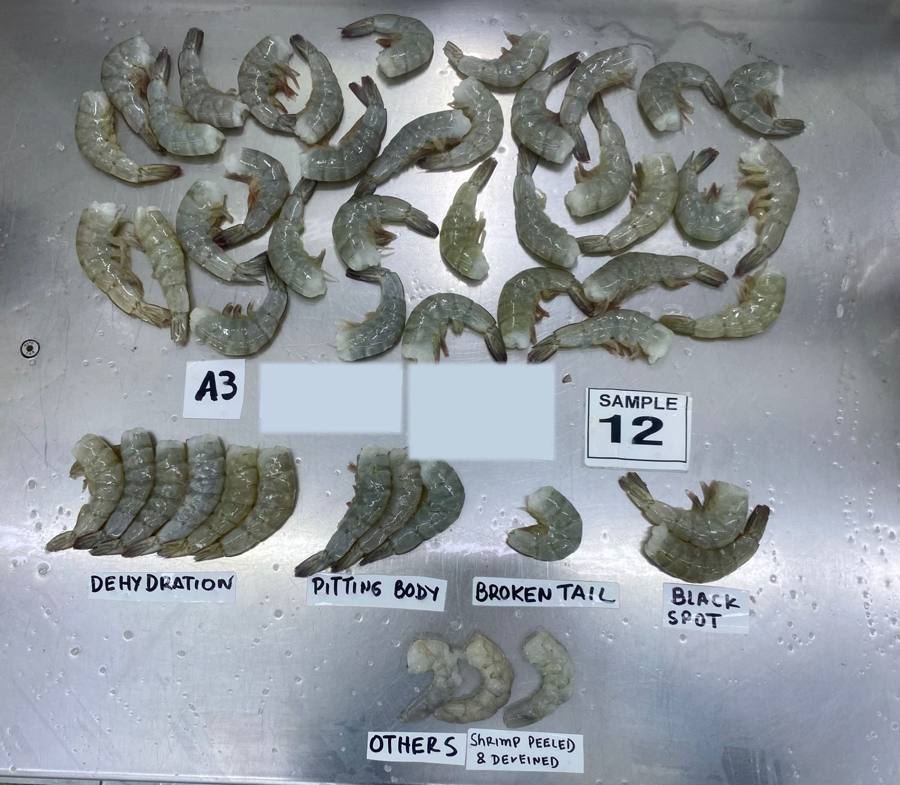
| Defects | Black spot (melanosis), broken and damaged pieces, soft shell, dehydration, poor peeling or deveining, foreign matter. | The grade you paid for (Class A, B…). |
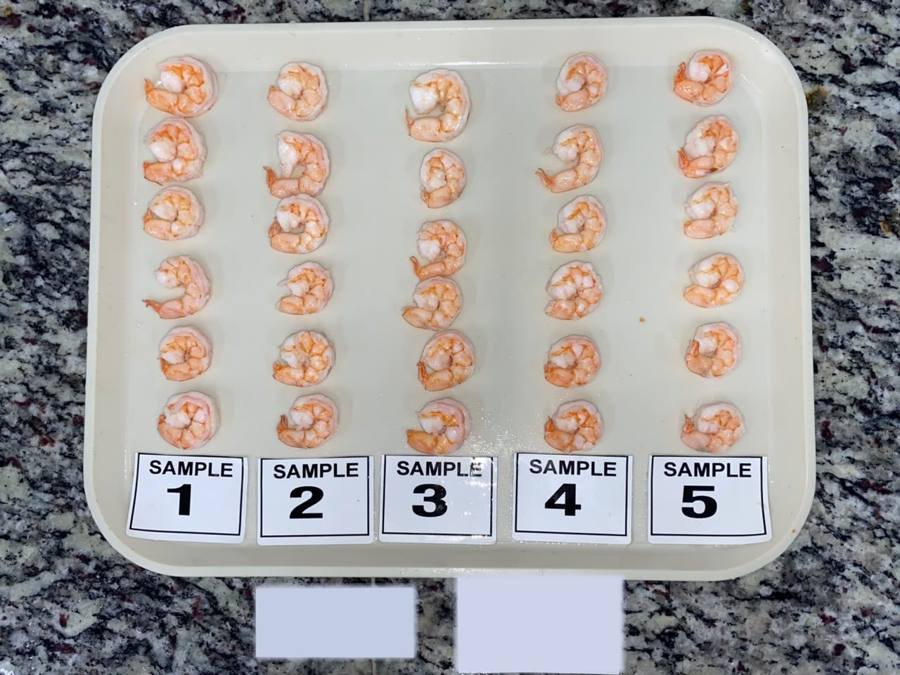
| Cooking test | A sample is cooked and checked for odor, flavor, texture and color. | Off-flavors that raw inspection can miss. |
| Temperature | Core temperature of the product, and cold-room and container temperatures at loading. | Cold-chain integrity and signs of thawing. |
| Sulfite residual | We review the plant’s residual analysis against your limit and your destination’s rules. | Rejections at US or EU ports. |
| Labels & packing | Brand, size, dates, lot codes, carton and master condition, packing type (block, IQF, semi-IQF). | That the product can be sold as labeled. |
A net weight 2% below the declared weight looks minor in one box. Across a full container it adds up to hundreds of pounds you pay for and never receive. The U.S. FDA found that 36% of the frozen seafood import samples it tested between 2022 and 2024 were under their declared weight; the Ecuadorian shrimp samples in that program passed. An inspection before shipment is how you keep it that way for your own orders.
01
Share the PO, specification and plant. Tell us the production and loading dates.
02
We coordinate the visit with the plant and assign an inspector in that region.
03
Samples, measurements and photos at the plant, during production and at loading.
04
You receive the report the next business day and decide whether to approve, rework or re-inspect.
Photos from our own inspections. Buyer, plant, PO and dates are removed.
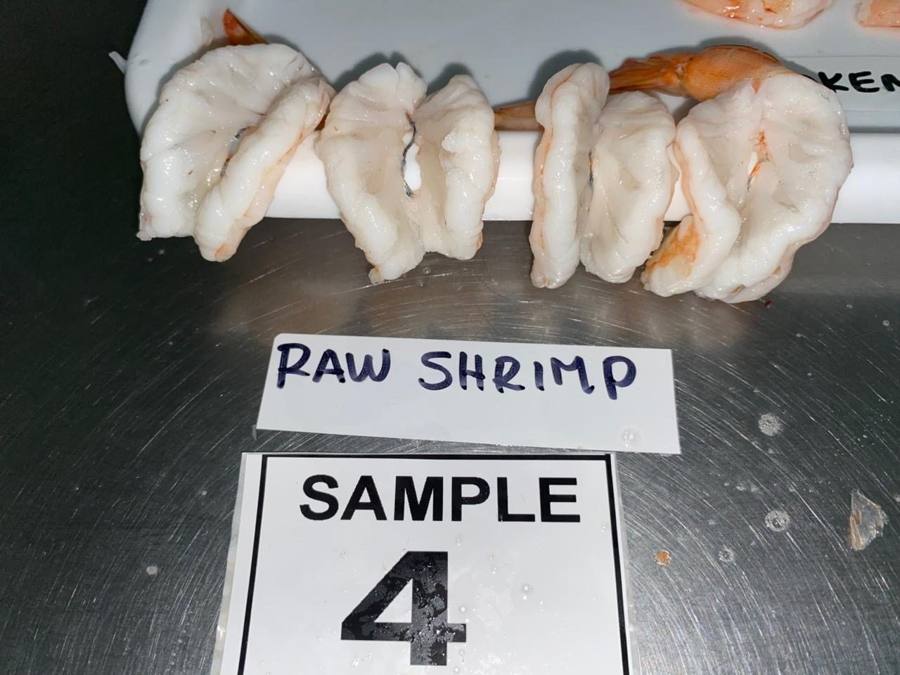
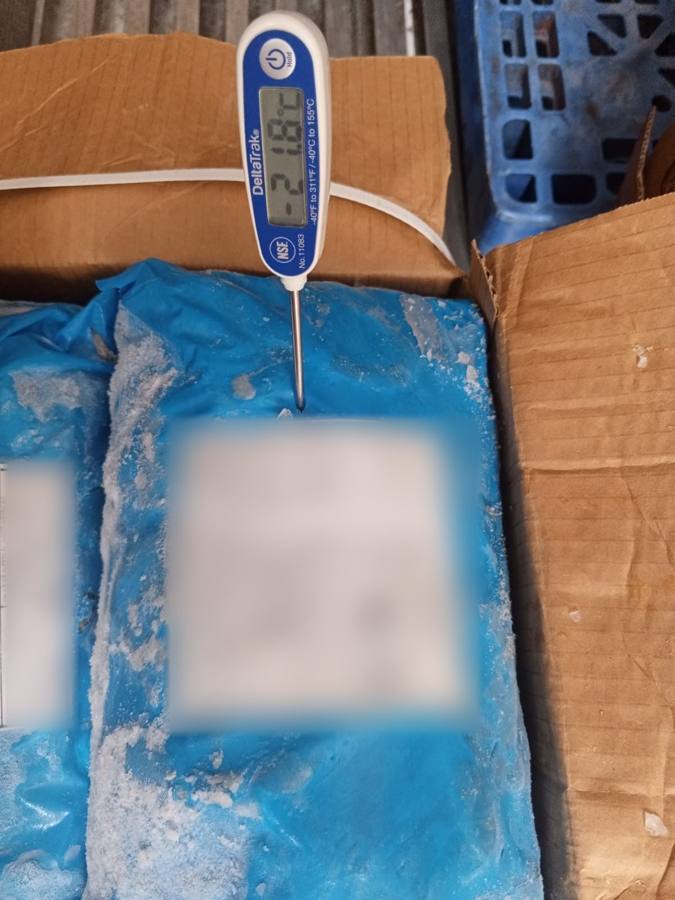
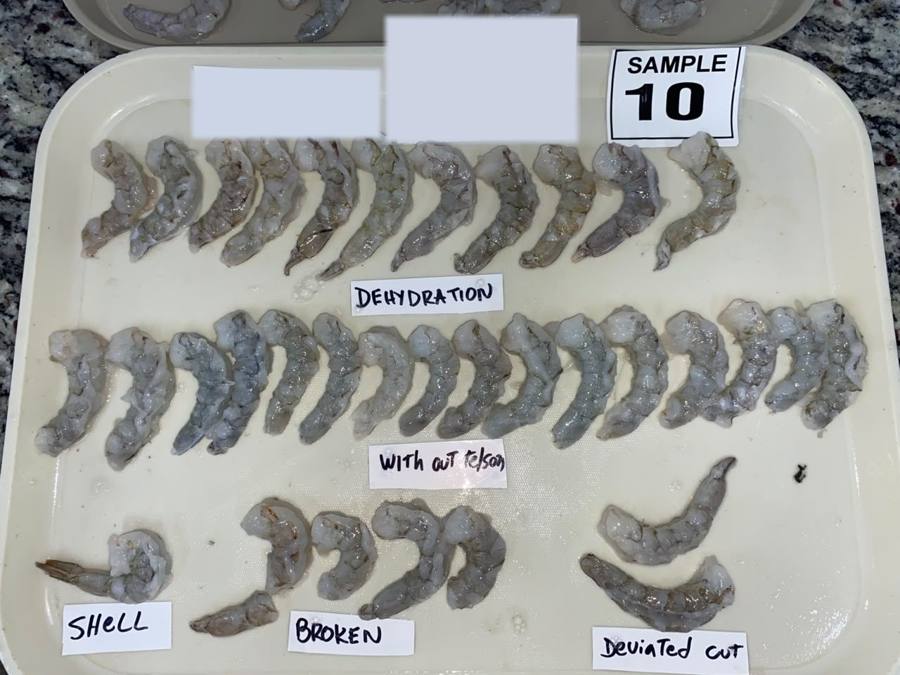
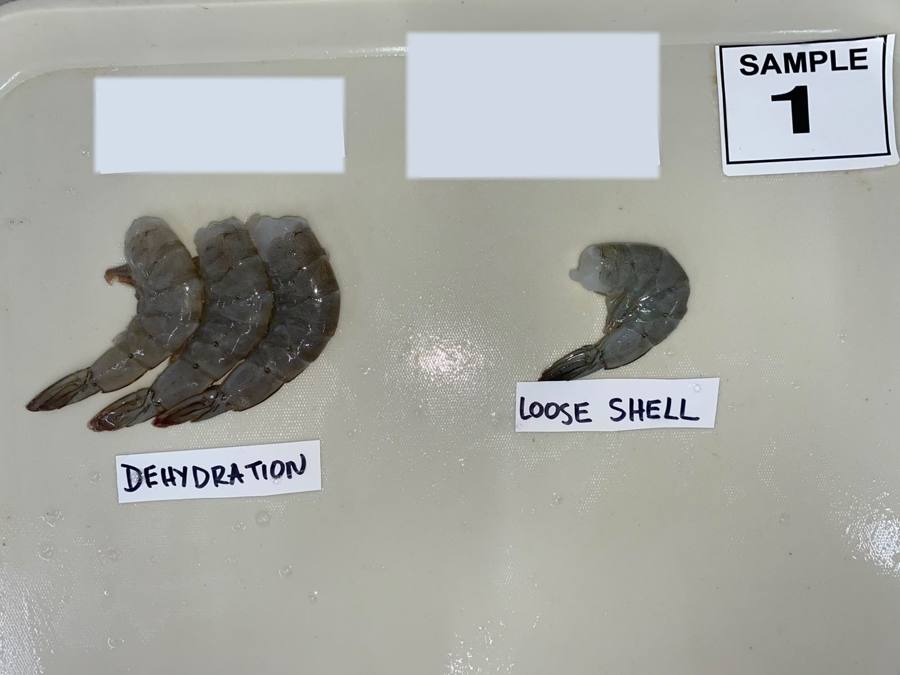
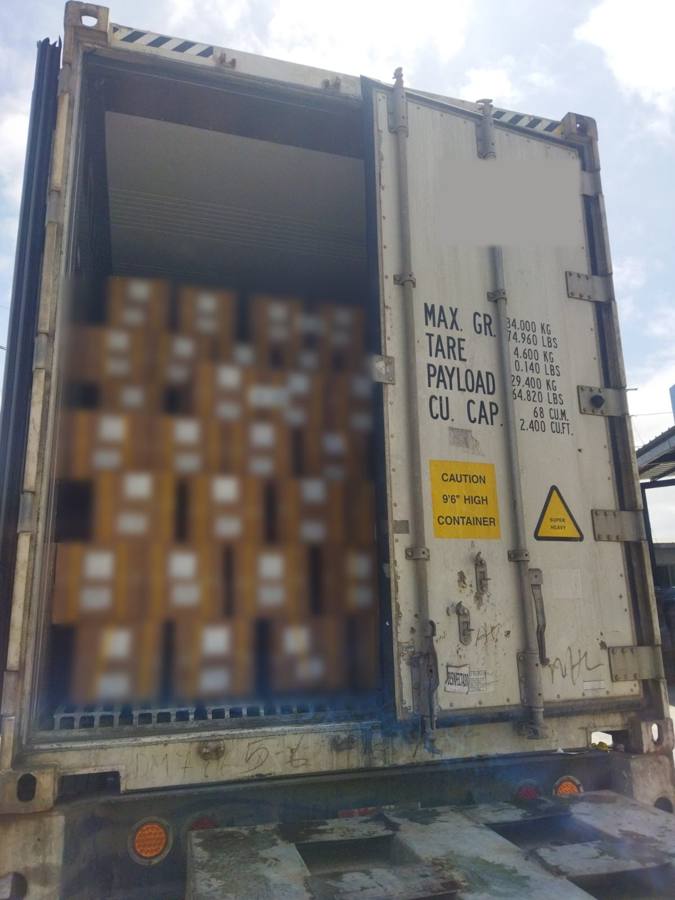
Many agents in shrimp are paid by the packer. We are hired and paid by the importer, so our report reads the same whether the news is good or bad. When we find a difference, we show it with the measurement and the photo, and we explain what it means for your order.
We check the product and the plant’s documents against what your market requires:
Buyers we inspect for are in the United States, Europe and Asia. Reports in English, Spanish or Chinese on request.
Any export packing plant in Ecuador. Most of our inspections are in Guayaquil, Durán, El Oro (Machala and Santa Rosa) and Manta. Tell us the plant name and we confirm coverage and date.
As soon as you know the production date. With two to three business days’ notice we can schedule an inspector in almost every case.
We take sample boxes, remove the glaze with water, drain the product and weigh it. The drained weight is compared with the net weight declared on the box and on your contract.
We report it with the measurements and photos, and you decide. Usually the plant reworks, repacks or replaces the product, and we re-inspect before loading.
The buyer. That is what keeps the report independent. We quote per inspection or per pound, depending on the service and volume.
Yes. We record product and container temperatures, carton count, labels and seal numbers, with photos of the loading.
Yes. Besides inspection, we work with plants across Ecuador and can source HOSO, HLSO and value-added shrimp for you. See our products.
Send us the plant, product and ship date. We reply with availability and a quote.